The harpooner had missed, and now he was hauling his irons back in over the gunwale, slowly, thinking about it, while the captain in the stern of the boat lost his temper. “Clumsy lubber!” the captain shouted, hoarse with passion. “You a whaleman! You are only fit to spear eels! Cowardly spawn! Curse me, if you are not afraid of a whale!” The man came up off his thwart as if a snake had bitten him. He stood there a moment, cheek burning, then dropped the iron he had just drawn in, turned half round and went head first into the sea. The tub-oarsman, coiling line in the after part of the boat, saw what he meant to do just in time and caught him by the heel. He did not come back aboard without a fight. Afterwards the captain tried kind words on him, being genuinely sorry, because he knew the man to be noble-hearted and knew what his own insult had touched.
That is 1839, in the pages of The Knickerbocker, in an article by J. N. Reynolds titled Mocha Dick: Or the White Whale of the Pacific, presented as a leaf from a manuscript journal. Mocha is an island off the coast of Chile, latitude 38 degrees 28 minutes south, twenty leagues north of Mono del Bonifacio and opposite the Imperial river. Spaniards lived there during the previous century; by Reynolds’s time it had been deserted for some years. The climate is mild, the winters barely distinguishable from the summers, frost unknown in the lowlands and snow rare even on the highest peaks.
The whale that took the island’s name had a mixed reputation among the men who hunted him, and Reynolds is careful about it. He was not, by the account of the whaleman telling the story, a creature of settled malice. He would sometimes pass quietly round a vessel, or swim lazily and harmlessly among the boats when they were armed with full craft for the destruction of his race. The forbearance earned him nothing. If his foes had no other charge to bring, they would swear they saw a lurking deviltry in the long, careless sweep of his flukes. What is certain, Reynolds writes, is that all that indifference vanished with the first prick of the harpoon, and that cutting the line and running for the ship were frequently the only means of escape left to his discomfited assaulters.
The chase itself, in Reynolds, is a race between boats as much as a hunt. Half a mile ahead lay the object of our emulation and ambition, heaving his huge bulk in unwieldly gambols, as though totally unconscious of our approach. There he blows, an old bull by Jupiter, eighty barrels waiting to be towed alongside. The tough blades bent like willow wands and quivered like tempered steel in the warm sunlight; the waters boiled under the prow and the trenched waves closed, hissing and whirling, in the wake. To become a first-rate oarsman, the narrator explains, requires a natural gift, and every mother’s son of his crew pulled as if he had been born with an oar in his hand. The story is told ashore, or aboard, to an audience, and it is interrupted: the mate of the Penguin, a sealer who had listened up to that point with excitement, took some remark as an insult to his trade, sprang from his seat and planted himself in front of the speaker. You, he began, you whale-killing. Reynolds says he has forgotten the exact obnoxious expression that set him off.
More than a century later, in March 1955, Het Parool ran a long feature on South Sea whaling that retold what may be the whale’s greatest fight, and it reads like a set piece of naval warfare. Mocha Dick surfaced a mile and a half to windward with his usual cracking blow, coming up so fast that for a moment, at that distance, he seemed to stand on his tail before falling on his side with a noise like a house going into the water. Six whaleboats went out, two from each of three ships, and sat rocking over the place where he had gone down, waiting twenty minutes. When he came up again the crews had worked out his method: one man saw the mountain of flesh and bone rising under his boat in time to shout, and the oarsmen backed water like men possessed. The whale missed, struck air, and came down in a drenching crash. An American boat slid in through the surf he had thrown up and the harpoon flew across the water and stuck quivering in the pale hide. Then he turned. The American boat, made fast to him by the harpoon, danced along behind him like something demented; he twisted again and caught a British boat before it could clear, rolled onto his side, took it in his jaws and shook it with his head in the air, the way a terrier shakes a rat. Three ships and ninety men blew the retreat. The paper, quoting Whipple’s description, calls it a complete defeat of puny men by a mighty animal.
Melville’s Moby Dick appears to derive from this real animal, and the scholar Ben Rogers has argued that the change of name is itself the point. One meaning of mob is to wrap in a cowl or veil; add the adjectival ending and you get moby, having the qualities of being hooded, especially about the head, which answers to Ishmael’s “grand hooded phantom”. Dick may be shortened from Dickens, a euphemism for the devil, or suggest Dicky, an officer acting on commission, fitting for a whale conceived as God or God’s agent. Rogers notes another sense too: dick was slang for dictionary, and slang for using long words, and in “Cetology” Melville offers “Macrocephalus of the Long Words” as a name for the sperm whale, macrocephalus meaning big head. The joke runs on: the long “Cetology” chapter is a futile attempt at definition, and the whale evades the author’s intellectual harpoons.
Melville knew he was attempting the impossible and said so. The classification of the constituents of a chaos, nothing less is here essayed. He stacks up the authorities to prove it: Captain Scoresby in 1820 saying no branch of Zoology is so much involved as Cetology; Surgeon Beale in 1839 reporting that utter confusion exists among the historians of the sperm whale; the phrases about an impenetrable veil covering our knowledge of the cetacea, and a field strewn with thorns.
That Beale is not a bit of scenery. Raffaele d’Isa and Charles Abramson have argued that Beale’s The Natural History of the Sperm Whale of 1839, Henry Cheever’s The Whaleman’s Adventures in the Southern Ocean of 1850 and Thomas Southwell’s The Seals and Whales of the British Seas of 1881 did more than compile knowledge: they helped awaken a consciousness that whales might need protecting. Beale and Cheever were among the first naturalists to deal with living whales directly, and they refused the dominant stereotype of the bloodthirsty monster of the deep, describing instead animals capable of cognition and emotion, which made readers face animal suffering and extinction.
Melville had his own version of the whale as divinity, and it is the ugliest chapter in the book. Aboard the Jeroboam a crewman who had been a prophet among the Neskyeuna Shakers announced himself as the archangel Gabriel, ordered the captain overboard, and declared himself deliverer of the isles of the sea and vicar-general of all Oceanica. When Moby Dick was sighted he warned against attacking him. The chief mate, Macey, went anyway with five men, and was struck from his boat’s bow and killed without a single mark of violence on him, the whole thing watched from the ship. The vial, the vial, Gabriel shrieked, and the terror-stricken crew gave up the hunt. Asked by Captain Mayhew whether he meant to hunt the White Whale himself, Ahab answered: “Aye.”
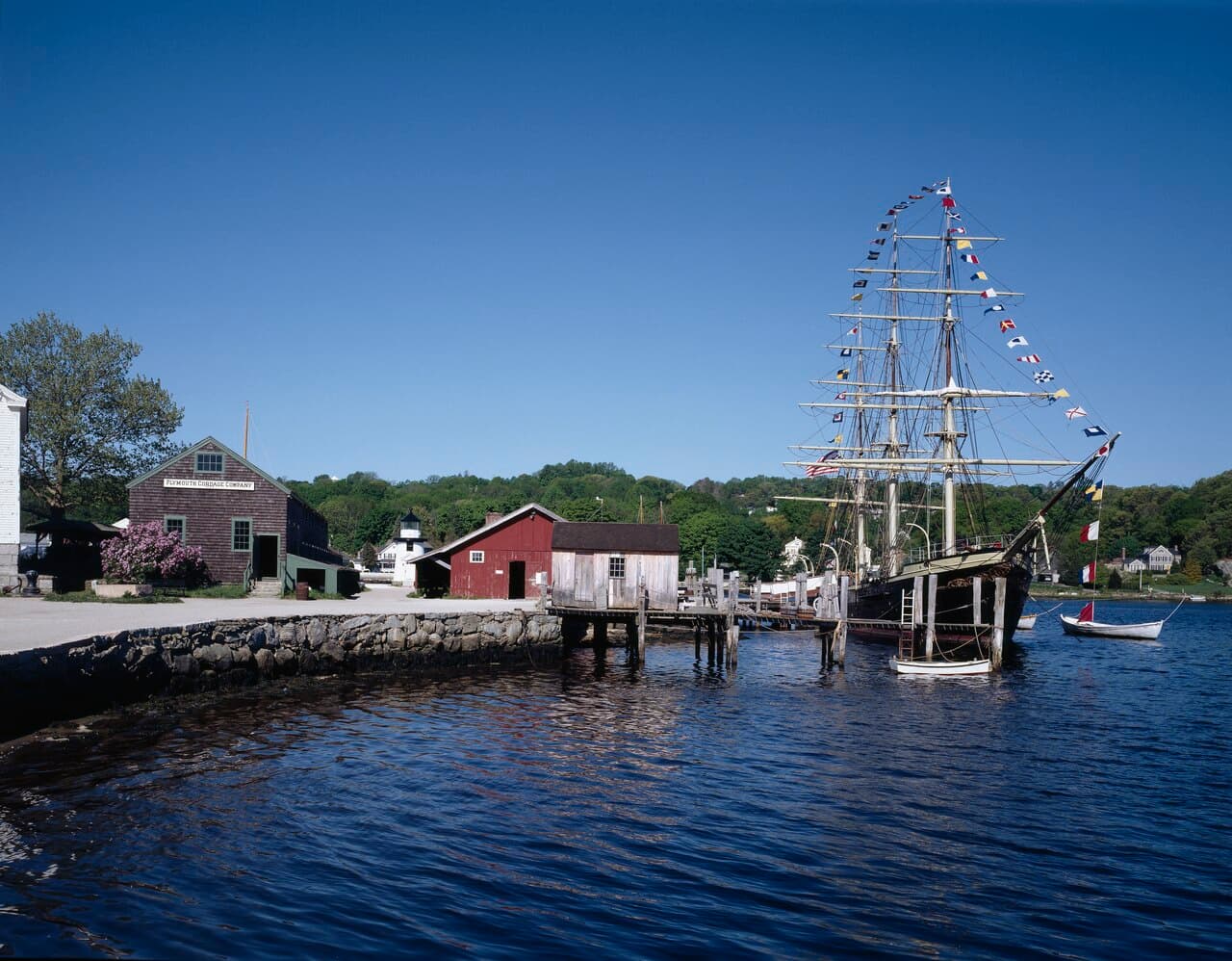
Het Parool ended its 1955 piece with the accounting. Modern whalers go after the animals with cannons and floating factories, and since the oil goes into margarine one of the margarine millionaires has been called the Prince of Whales, a title the paper thought better suited to the nameless men who went at these creatures in small ships, with poor weapons and charts full of blank spaces. Fortunes were made that way: the Morgan returned two million dollars to her various owners over thirty-seven voyages and seventy-five years. The handling was rough, the punishments cruel, the food often bad, and the captain doubled as ship’s physician, surgeon and dentist.
In Reynolds, the morning after the harpooner went over the side, the men were at breakfast. The watch at the fore-top-gallant head sang out merrily, “There she breaches!” In an instant every one was on his feet.